Book a demo

We're going to Shoptalk Europe · 9–11 June 2026 · Barcelona — See you there▸
Inside the Invisible Store: Bruno Fernandez on How Real-Time Data Is Reshaping Retail

Inside the Invisible Store: Bruno Fernandez on How Real-Time Data Is Reshaping Retail
Author
Category
Client
Solution
Industry
Reading time
Share on social media
What does it take to make a physical store as intelligent as the digital shelf? That question sits at the heart of what Sensei is building — and it is a question that Bruno, a veteran retail strategy consultant, has spent the last decade trying to answer from the other side: working with operators to diagnose inefficiency, unlock margin, and rethink what a store visit can mean for a customer.
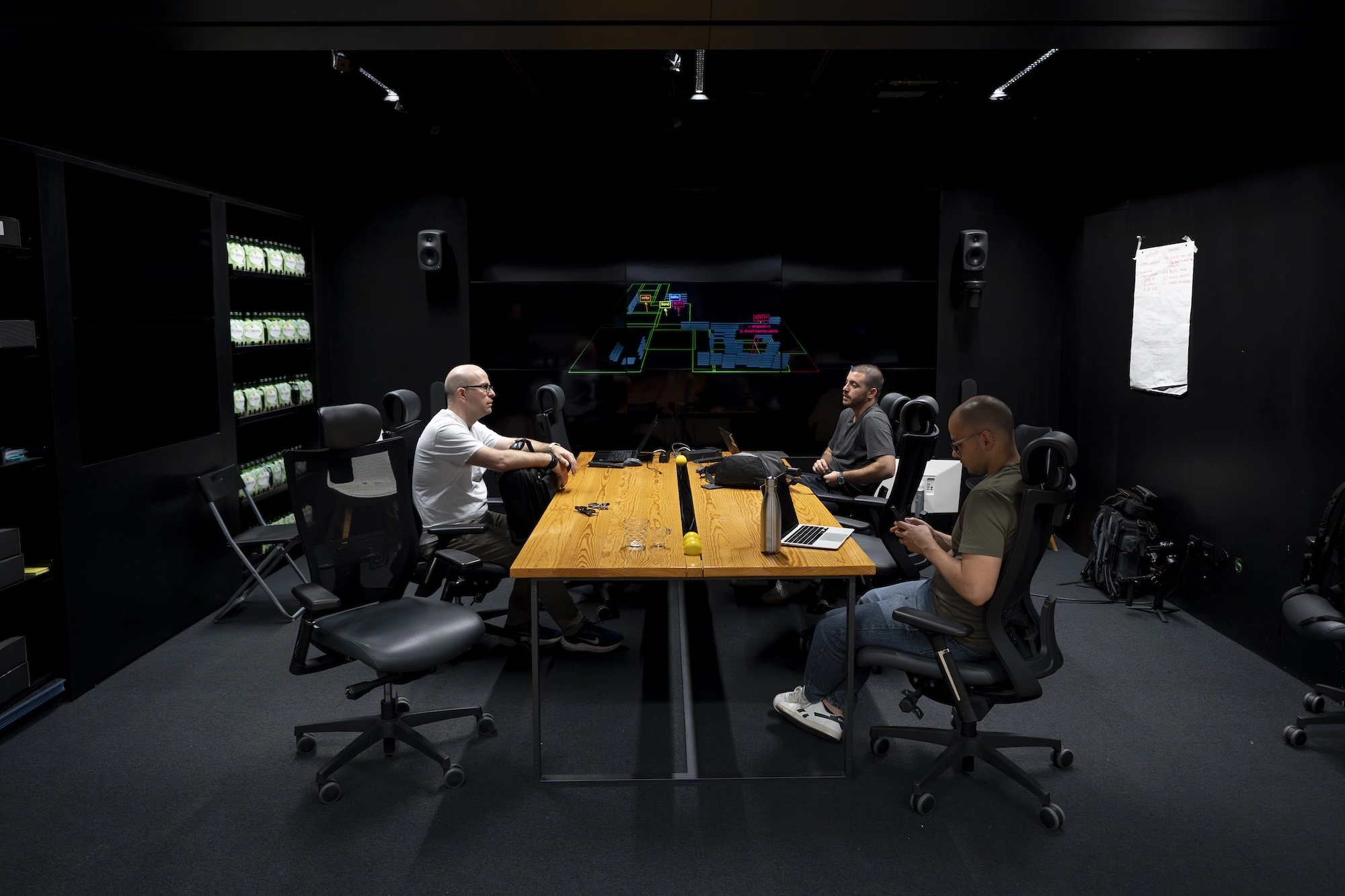
After touring Sensei's showroom and seeing the platform in action across multiple retail formats, Bruno sat down with us to share his perspective. The conversation that followed was candid, energetic, and genuinely excited.
For Bruno, the most revelatory moment during his visit was not the checkout-free experience, nor the heatmaps, nor the real-time inventory tracking. It was the back office.
"When I thought about the technology behind this, I imagined something impressive. What I didn't imagine was the entire universe of data sitting in the back office — data that simply doesn't exist anywhere in traditional retail today."
Traditional retailers are not short of data. CRM systems, loyalty programmes, point-of-sale logs — the numbers are abundant. But what has always been missing is the behavioural layer: how a customer moves through a store, where their attention lands, which products they pick up and put back down, what path they take from entrance to exit.
Sensei's platform captures all of that — passively, continuously, at scale. For someone like Bruno, who has spent years trying to optimise retail operations with incomplete information, this changes the conversation entirely.
"For years, we’ve been making decisions based on a customer journey no one has actually measured. This technology makes it real. And once it's real, you can actually improve it."

Ask any retail consultant what their clients worry about and they will mention labour costs, shrinkage, and conversion rates. What they rarely mention is friction — because friction is hard to put a number on.
Bruno is direct about this: the checkout queue is not a neutral feature of the store. It is a moment of friction that costs money in ways most operators have never quantified.
"When you arrive at the checkout, you have to unload your basket onto a conveyor belt, wait, then reload it. It’s a daily source of lost revenue and operational inefficiency.
Eliminating it changes how the customer feels about coming back."
But Bruno is equally clear that the case for autonomous retail technology cannot rest on qualitative experience alone. The financial logic has to stack up — and he believes it does.
"Yes, there is an upfront cost. But the real cost isn’t the investment. It’s everything you’re currently losing and not measuring: labor inefficiencies, shrinkage, and abandoned sales. Against those savings, the investment calculus looks very different."
He points to one data point that particularly caught his attention: stores using Sensei's technology have seen uplift in sales of nearly 20% compared to equivalent traditional formats.
"That alone," he says, "should end the conversation about whether this is worth piloting."

Spain has not been an early adopter of in-store technology. Bruno is frank about why — and equally frank about how quickly that could change.
"When people in Spain talk about digitalisation, they often mean a digital screen on the wall. That's not transformation. Some forward-thinking operators have moved to electronic shelf labels — but that's the tip of the iceberg. The real reluctance comes from cost anxiety, not from a lack of interest."
The irony, as Bruno sees it, is that the very cost concerns holding operators back are precisely the problem this technology solves.
"The real question isn’t ‘what will this cost?’ but ‘what is my current setup already costing me in lost margin?’"
He is confident the market will move — and move quickly once the first pilots land.
"The Spanish retail market is sophisticated. It is competitive. When operators see a neighbour running a store that has lower costs, higher margins, and better customer satisfaction scores, they will not sit still. The question is who goes first."

Perhaps the most forward-looking part of the conversation was about what comes next — not just operational efficiency, but the possibility of making a physical store respond to individual customers in real time.
Online retail has been personalising the customer experience for two decades. Product recommendations, dynamic pricing, tailored promotions — these are standard. Physical retail has never been able to match it. Until now.
"When physical stores start reacting to customers in real time — responding to a specific person, based on their behaviour, their needs, their history — the impact on conversion and basket size will be immediate. That has never been possible before."
Bruno is careful to distinguish between automation and intelligence. Automation replaces a task. Intelligence — powered by AI — learns, adapts, and generates responses to scenarios that were never explicitly programmed. The Sensei platform, in his view, sits at the intersection of both.
"What I see here is not just a smarter checkout. It is an observational layer that will, with the right data science on top of it, allow a store to know more about its customers than any loyalty card ever could — and act on that knowledge in the moment."

Bruno left the Sensei showroom with a clear takeaway: the technology works, the business case is real, and the only variable is timing.
"The solution is scalable. I have seen it work across a large supermarket, a pharmacy format, and a micro store. It adapts. It does not impose. You can tell there is serious R&D behind it — it shows in how seamlessly it fits into very different environments."
Retail has always been a margin game. Every point of efficiency matters. Every point of friction costs. Every missed insight is a lost opportunity.
What Sensei offers is not a product. It is a new operating system for the physical store — one that finally gives retailers the same intelligence that their online counterparts have taken for granted for years.